
We’ve all heard horror stories about whales. From SeaWorld deaths to capsized boats in open waters, it’s understandable to be equally awed and intimidated by some of the world’s largest mammals. Despite this, tourists still pay big bucks to embark on whalewatching cruises in vacation destinations such as Maui, Cape Cod, Alaska, Washington State, California and more. With whalewatching season kicking off in Maui this month, I decided to dive deeper into what makes these creatures so fascinating to onlookers and scientists.
Upon researching whales, I discovered that there are two types of whales – toothed and baleen (with the help of a 2024 article by Discover Magazine). Beluga whales, orcas and sperm whales are considered “toothed” since they indeed have teeth and eat squid, fish and other marine mammals. Meanwhile, there are 14 variations of baleen whales, including the commonly mentioned humpback and blue whales. Unlike the more overtly predatory toothed whales, baleen whales trap food sources like fish and plankton through water-filtering plates.
Whales are surprisingly intelligent. Blue and humpback whales are notorious for their communication via whale songs during mating season. Humpback whale songs can be heard hundreds of miles away, depending on water depth, water temperature and other noise. Interestingly enough, baleen whale songs also communicate more complex emotions such as loneliness and grief.
On the other hand, toothed whales communicate via echolocation, or sound waves that bounce off objects in water, in addition to communicating with whistles and clicks to other whales within their pod.
Social dynamics within whale pods are also studied among scientists. It has been discovered that pods are often strongly bonded and that whales engage in play and learning, in addition to experiencing empathy and compassion. When grieving their offspring, female whales even carry their deceased calf with them. Humpback whales have also been seen defending other whales and mammals from orca attacks.
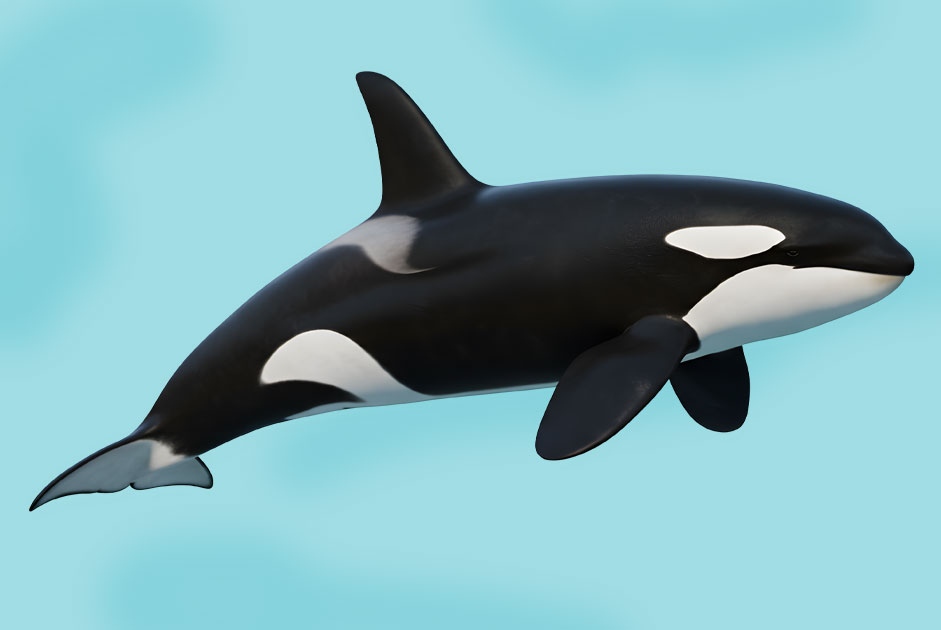
On a heavier note, orcas (also referred to as killer whales) are recognized by their iconic black and white colors, prey on larger whales and are closely related to dolphins. According to the Whale and Dolphin Conservation, orcas also hunt fish, seals, sea lions, dolphins, sharks, rays, squids and seabirds.
Aside from the tragic death of SeaWorld trainer Dawn Brancheau in 2010, orcas have been responsible for approaching kayakers and ramming and sinking yachts, fishing boats and sailboats. A September 2025 article in USA Today referenced a recent incident off Portugal on September 13th where orcas attacked a sailboat, breaking the rudder and creating a hole that allowed water to enter the vessel. Fortunately, the five sailors on board were left unscathed. Although scientists insist that boat attacks from orcas are playful rather than aggressive, the threat of bored whales antagonizing sailors, fishermen and tourists by potentially sinking boats is unsettling. Scientists explain that juvenile orcas are often entertained by boat rudders, as the open ocean can be a very boring place. This phenomenon can be comparable on a much smaller scale to dogs chasing cars or cats toying with random household objects in their spare time between naps.
When it comes to the violent and tragic death of trainer Dawn Brancheau, a 2010 TIME Magazine article explains what may have triggered orca Tilikum’s aggression, an orca who was previously involved with the drowning of another trainer in 1991 alongside two other orcas. Additionally, in 1999, the body of a SeaWorld trespasser who jumped in the whale tank was found lying across Tilikum’s back. Scientists can only conclude that orcas can also lash out in aggression when in a bad mood or if they feel threatened, much like humans, but are not typically considered threatening to humans in particular. It has also been theorized that living in captivity may have been a stressor for Tilikum, although most of his orca peers seem to adjust to life in captivity without taking out their aggression on trainers. Although it is unclear as to what exactly triggered Tilikum’s attack, it is safe to conclude that orcas have bigger fish to fry and that humans are not at the top of the killer whale menu.