By OLYA DADRESSAN
photos by: YASMIN LEONARD PHOTOGRAPHY
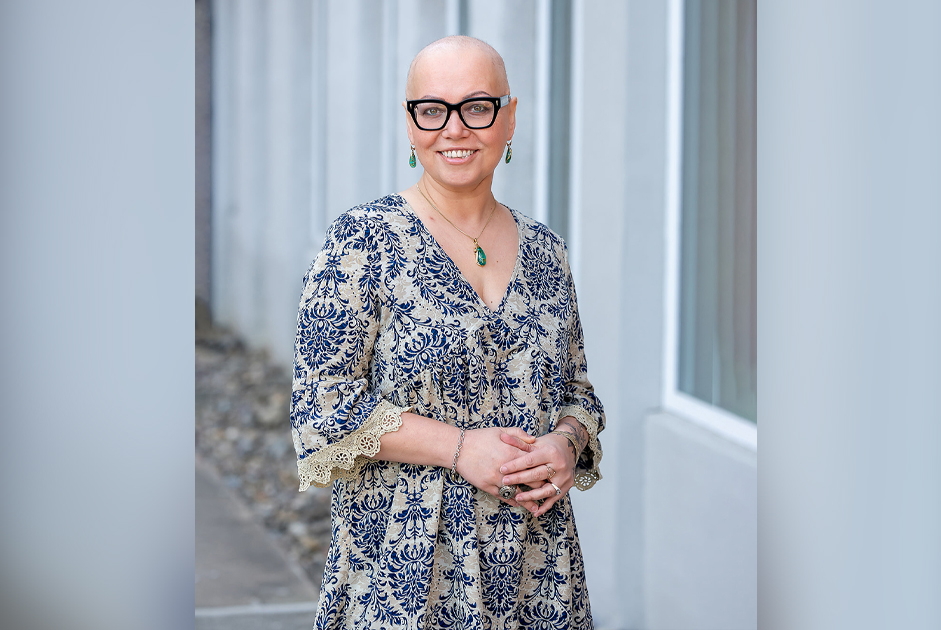
I have been a big fan of Forsyth Woman magazine for quite some time, truly appreciating its focus on elevating businesswomen of our community. As a female financial advisor in a male-dominated industry, I value initiatives that encourage driven and successful women to collaborate and empower one another. I always imagined that one day I would share my business journey – a path that took me, an immigrant from Belarus who arrived in the U.S. alone in my early 20s with just $100 to my name, from working in human rights and international relations to building a family and a successful practice in financial planning, retirement and wealth management.
Never did I expect that the story I would be sharing would have nothing to do with my success. Instead, it would be something deeply personal – an experience that many women may face in their lifetime: a cancer journey.
At 47, with a long history of responsible choices, years of being vegan and a reasonably active lifestyle (albeit with on-and-off commitment to exercise), I believed I was in good health. Yes, I had begun to notice hormonal changes, but I was reassured that these were a normal part of aging and thought little of them.
So, when I felt a lump on my neck, I assumed it was just another temporary change that would resolve on its own. After a few weeks, I decided to have it checked. In early January, our family was shaken to its core when I was diagnosed with aggressive non-Hodgkin lymphoma. With no family history of cancer, strong blood work and no significant medical history beyond three C-sections many years ago, the diagnosis came as a complete shock.
I had heard that we face a 40–50% lifetime risk of cancer, but like many people, I never truly believed it would apply to me. What struck me even more was how many individuals in online cancer communities were far younger – in their teens, 20s and 30s. That realization brought a mix of emotions: gratitude that I was at a stage of life where I no longer had to worry about having children and also relief that I was still young enough to endure treatment and recover with strength.
After the initial shock, we made a conscious decision: rather than allowing fear and anxiety to define this chapter, we would approach it with hope, gratitude and intention. Less than six months later, my most recent scan shows no evidence of cancer, and I feel stronger and healthier than before – even after completing chemotherapy.
In the early days following my diagnosis, I immersed myself in learning. There is no shortage of medical information, research and shared experiences available through online communities. Understanding the disease, treatment protocols and expected side effects was relatively straightforward. What proved far more difficult was finding reliable information about integrative and holistic approaches that could support the body during treatment. Much of what I found came with disclaimers about limited evidence or a lack of large-scale studies.
Fortunately, my interest in holistic health began long before my diagnosis; and from the very beginning, I knew I wanted to combine conventional treatment with integrative approaches to strengthen my body throughout the process.
I also explored alternative paths, including holistic-only cancer treatments and integrative clinics both in the U.S. and abroad. While some centers offer comprehensive programs, they are not covered by insurance and can cost anywhere from $70,000 to $350,000. After careful consideration, we chose to follow the standard course of chemotherapy while integrating holistic strategies independently.
Very intentionally, my focus of the past few months has been fixed on wellness rather than cancer, all aspects of it: spiritual, emotional, physical, intellectual, environmental, financial, occupational and social.
The foundation of my daily routine contained:
- Gratitude and a positive mindset
- Journaling to track habits, treatments and progress
- Intentional nutrition
- Time in nature
- Mindfulness and meditation
- Gentle movement such as yoga and Thai chi
- Acupressure practices
- Targeted supplements and more
For the first two months especially, I documented everything – what I ate, how far I walked, the practices I followed and even simple health markers like weight and blood pressure. This gave me a sense of control during a time that can often feel uncertain.
If there is one thing this experience has taught me, it is that health is not something we can take for granted – and it is not something we should begin prioritizing only after a diagnosis. The small, consistent habits we build over time become the foundation we stand on when life presents unexpected challenges.
My hope in sharing this story is not to offer a prescription, but a perspective: that even in the most difficult moments, there is space for intention, empowerment and resilience. And that, perhaps, by starting to build these practices now, you may one day find yourself better prepared – strong in body and steady in spirit – no matter what comes your way.