
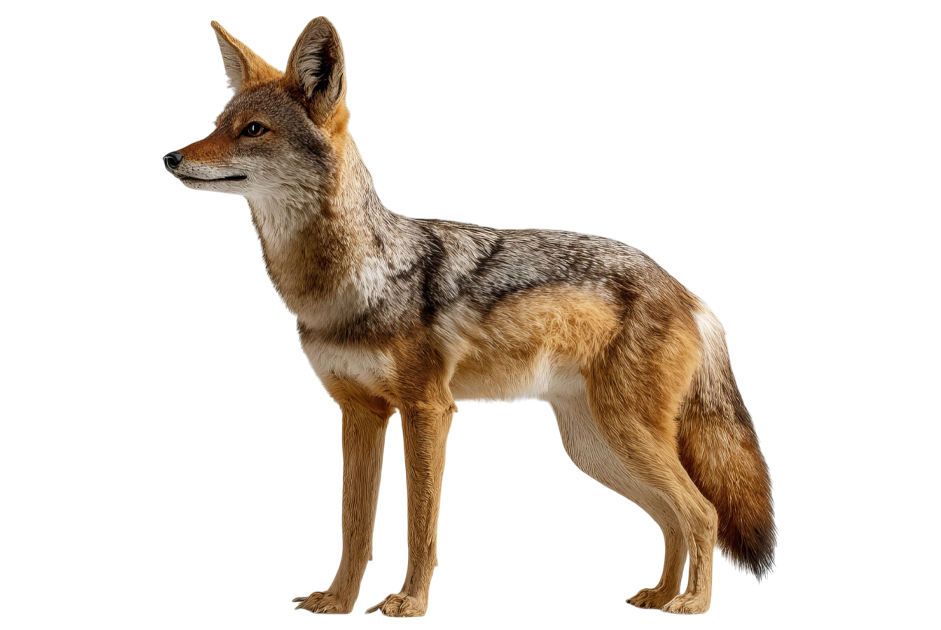
I’ve always had an affinity for kooky creatures as far back as I can recall. When I was in college, I worked as a leasing agent at my student apartment complex. One afternoon, a seemingly friendly (and adorable) fox was roaming around the parking lot, and to my surprise, the property manager went outside to greet and approach the fox without hesitation. My coworkers and I stood inside in horror, debating on calling animal control, but the fox eventually got bored and scurried away. Ever since then, I’ve felt a fondness for the quirky creatures that foxes seem to be. I’ve even decorated half of my apartment in fox-themed knickknacks and wall art – so why not write an article about them?
After spending hours watching YouTube videos of domesticated foxes, I decided to do a deep dive and find out more about what makes foxes tick. Although dog-like in appearance but cat-like in behavior, foxes are part of the canidae family like dogs, but the two are not too closely related. In North America, you’re most likely to see the red fox, with its orange to auburn fur and long, bushy tail. They can be found in various terrain from mountains to deserts, where they hunt and eat small rodents, fish, insects, amphibians, reptiles, and even fruits and berries.
The gray fox is another common fox found in North America with gray speckled fur and slightly smaller in size than its red fox counterpart. In fact, the high likelihood of encountering small foxes referred to as “island foxes” in the Channel Islands National Park was actually one of the biggest reasons I spent a year researching and toying with the idea of taking a ferry out to the park. As descendants of the mainland gray fox, the island fox is not much larger than a house cat and loves to hang out around campgrounds on the islands, waiting to run off with a camper’s lunch.
Now that we’ve covered the basics, what truly fascinates me is the intelligence and quirky nature foxes exhibit. Interestingly enough, foxes are more socially complex than one would initially think. They live in hierarchical family groups, communicate with a variety of noises and utilize tail movements and facial expressions to help get their point across. In the woods and hear what sounds like a woman shrieking? It’s likely a fox.
Foxes are considered to be more intelligent than dogs, with higher than normal problem solving abilities and excellent memories. When hunting, they often stalk and pounce (similar to cats), making them predatorial but endearing. They take advantage of the late evening and early morning dimness to sneak up on prey and also scavenge for food, raid birds’ nests and even bury food for later consumption. If you’ve ever watched Dora the Explorer, the cartoon fox named “Swiper” makes a lot more sense after learning about their hunting habits.
Although many people have domesticated foxes when laws permit, fox owners often complain about the difficulty of training a fox in comparison to training dogs due to the fox’s high intelligence and sly behavior – not to mention its tendency to frequently urinate inside as a form of territory and scent marking.
While foxes are usually shy around humans, the real danger when it comes to foxes is disease transmission. They’re known for transmitting the rabies virus, sarcoptic mange (mites that burrow under the skin) and parasites like roundworms to other animals and humans. Unlike my former property manager, it is best to keep your distance from foxes you encounter out in nature as you never quite know what they could be carrying.