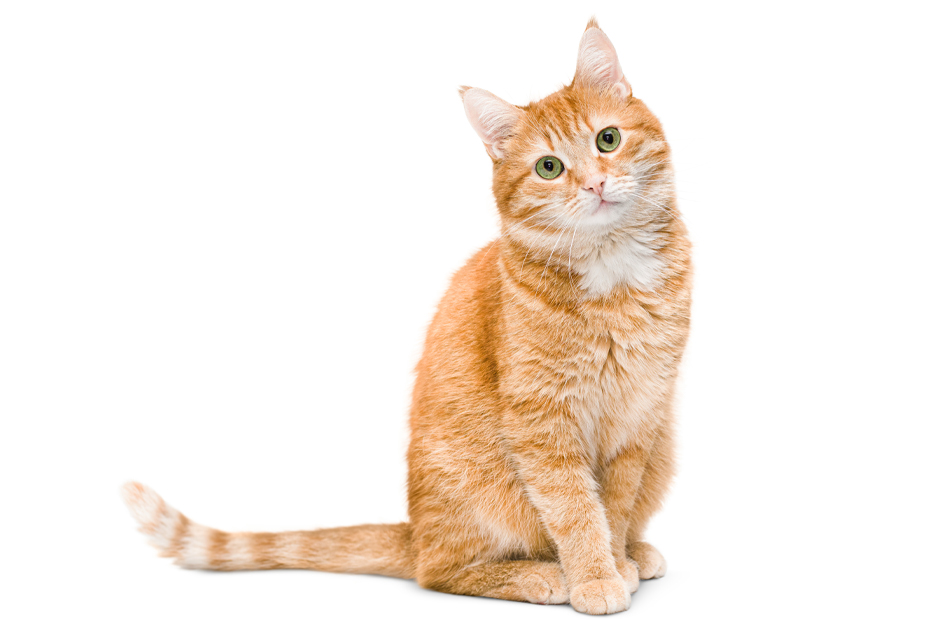
For the last six months, my dad has been grieving the loss of the family cat, Abner, who was especially partial to my dad to the extent that he would cry when my dad left the house even for a brief period of time. Abner had a unique, quirky personality that left an impression on anyone who interacted with him, and my dad was his favorite person. After my dad worked hard to nurse Abner’s diabetes into remission with proper treatments and medication, a few other health complications were discovered, leading to his passing in December.
Being an introverted man who grew up attempting to avoid showing vulnerability, my dad has been stunned at just how strongly Abner’s death has affected him. In fact, most of us take the loss of our furry family members to heart and struggle to pick up the pieces easily in the aftermath of an animal’s passing. With the exception of serial killers, I believe it’s safe to assume that most people shudder at the sight of a suffering animal, but why is it that we have such a soft spot for various species?
Anthropomorphism is defined as the interpretation of nonhuman things or events in terms of human characteristics. If you’re borderline insane like me, you may struggle to leave just one potato chip in the bag even if you’re full because you don’t want the chip to die alone in the garbage or feel left out. I often assume what my cat is thinking based on how I feel and believe that we have a much closer bond than what likely exists on her end beyond me feeding her daily. One of my college psychology professors, Dr. Hal Herzog, extensively researched human-animal relationships and sparked my interest in the topic after he wrote the book Some We Love, Some We Hate, Some We Eat: Why It’s So Hard to Think Straight About Animals discussing anthropomorphism at length.
As it turns out, not everyone is as prone to anthropomorphism as others. According to Psychology Today, research has discovered that the tendency to attribute human thoughts and behaviors to animals or inanimate objects may correlate more strongly with loneliness or higher levels of neuroticism (susceptibility to negative emotions like worry and overall emotional instability) than those exhibiting lower levels of neuroticism in their personalities. Ascribing human emotions to our pets may fulfill social needs, insinuating that pet ownership is largely more beneficial to us as humans than it may be to our indoor cats, who stare longingly out the window at birds flying by for hours on end. I know I can’t be the only heartbroken soul who’s been guilty of impulsively adopting a cat in my early 20s to cope with a breakup (and it worked).
Ever wonder why you talk to your dog in a baby voice? Domesticated animals like cats and dogs exhibit infantile-like traits found in human infants, such as large eyes and perceived helplessness and dependency (as well as other adorable features) that most humans innately desire to protect on a primal level. It’s almost as if our pets are unknowingly exploiting parental instincts that some of us (including myself) aren’t even fully aware we possess. Much related to this, one of the aspects of grief that my dad is dealing with regarding Abner’s death is whether my dad made the right choice in taking him to the vet and deciding euthanasia was the “best” route when Abner’s rapid decline and suffering became too much for anyone, including Abner, to bear. Parents despise seeing their children suffer, and witnessing the suffering of those most vulnerable and feeling responsible for a child or pet’s livelihood can feel indistinguishable from one another.
While we may be wrongly ascribing human emotions and personalities to our animals, I believe that’s part of the magic in pet ownership. As someone who believes many animals were divinely inspired to provide companionship to humans, what fun is life without a little delusion? Even if no one can prove it, I know with every bone in my body that Abner loved my dad and lived a good life.