
One of Costa Rica’s largest tourism draws is its diverse wildlife population. In North Carolina, seeing a cow in a pasture or a squirrel running up a tree trunk is nothing out of the ordinary. If you’re itching to see playful monkeys swinging from branches while relaxing on a beach, a trip to Costa Rica may pique your interest. In fact, my desire to mingle with monkeys was exactly what drew me to visiting Costa Rica. Continue reading to learn which types of monkeys you’re likely to see during your stay.
White-Faced Capuchin Monkey
With white faces, necks and shoulders contrasting the black fur covering their bodies, it’s understandable where they got their name. Yes, this is the exact monkey on my head in the photo and the type of monkey you’re likely to see posted on social media or postcards as the face of Costa Rica (and for good reason). I was fortunate enough to take a tour to a sanctuary and interact with a troop of these adorable (and quite soft) animals, but they can be slightly more aggressive than they appear.
If you visit Manuel Antonio National Park, you’re almost guaranteed to see a few walking along the trails or even outside of the park on power lines and in trees. They are highly intelligent, have surprisingly great comedic timing and make the cutest monkey noises. Crafty and stealthy, these monkeys are very social. As a precaution, it is wise to remove any sunglasses in their vicinity, as seeing their reflection in lenses can provoke their territorial side.
Howler Monkey
These monkeys are named “howler monkeys” for a reason. Known as the loudest land animal in the world, their distinct roar can be heard up to three miles away. Once you’ve heard it once, you’ll never forget the unique sound (I highly recommend listening on YouTube for reference). Prevalent in Guanacaste (cities like Tamarindo are great starting places), howler monkeys and their uniform black fur may not be as striking as the aforementioned Capuchin, but they are excellent alarm clocks with their howls being heard at dawn and dusk.
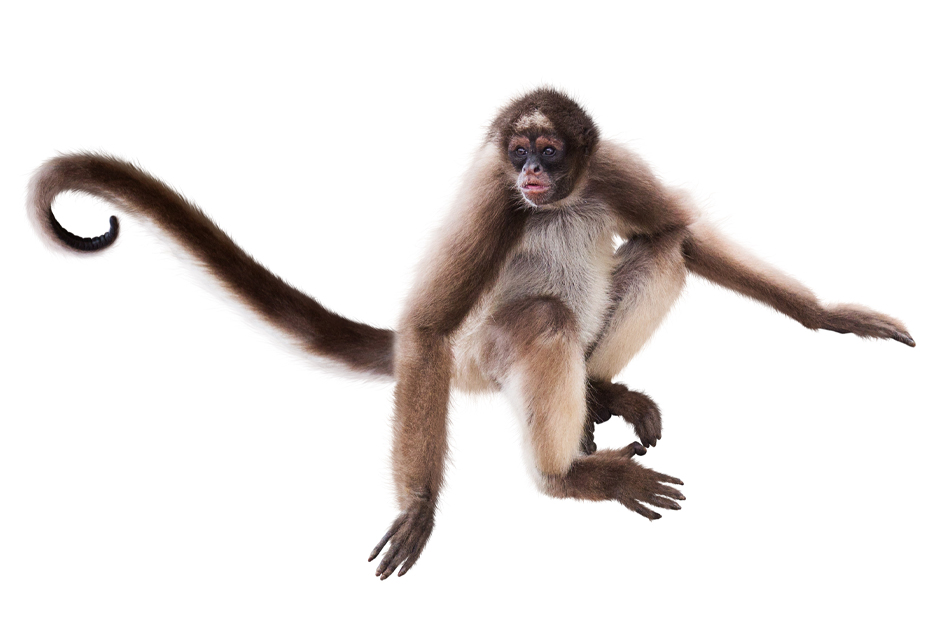
Spider Monkey
Unlike howler monkeys, spider monkeys are not known for making a lot of noise; instead, their exceptionally long limbs and strong tail that often serves as a fifth limb is what makes these nimble creatures stand out in the jungle. Their agility could put most Cirque du Soleil performers to shame, making them highly entertaining to observe. You can find them around hanging bridge trails at dawn in the popular Arenal/La Fortuna area. They are also frequently spotted on Costa Rica’s Caribbean coastline in Tortuguero National Park.
Squirrel Monkey
Smaller than other monkeys in Costa Rica, squirrel monkeys have an orange-brown tint to their fur and socialize in large troops. Quick and agile like spider monkeys, the squirrel monkey can be found in the Puntarenas Province in parks like Manuel Antonio and Corcovado National Park (one of the most biodiverse places on Earth). Squirrel monkeys are known for being clever due to their large brain size in comparison to the rest of their bodies. With their distinct black and white facial markings, they are sadly considered to be an endangered species.
The next time you find yourself in the Costa Rican jungle, keep your eyes peeled (without sunglasses, please) and ears open for multiple monkeys throughout the country. Please understand that touching or feeding monkeys encountered in areas like Manuel Antonio National Park is strongly advised against, as feeding them makes them more likely to approach tourists, steal personal items and become angry when they don’t get their way.