The weather is getting warmer, and people are gearing up to head to the water this spring and summer. In light of the beach season, I wanted to learn more about marine life and was sad to discover that so many valuable sea creatures are suffering. Below are two iconic sea creatures that are currently facing extinction.
Hawaiian Monk Seal
Adorable and often found lounging in the sand along Hawaiian beaches, the Hawaiian monk seal is strikingly similar to Pacific harbor seals or California sea lions in the face and body but are only found in the Hawaiian Islands. Although these blubbery beauties appear friendly and relaxed, it is imperative to keep your distance. If you see one of these seals on the beach, be sure to stay at least 50 feet away to protect yourself and the seal, as Hawaiian monk seals are endangered. If a mother seal is with her pups, be sure to stay back about 150 feet, since even seals can behave aggressively when protecting their young.
According to the National Park Service, approximately 300 to 400 seals live in the main Hawaiian Islands (Kauai, Oahu, Maui, Island of Hawaii and Molokai), with an estimated 1,200 seals inhabiting the Northwest Hawaiian Islands. These seals can live up to 30 years, spend two-thirds of their lives in the water and are able to hold their breath for up to 20 minutes at a time.
After reading up on the Hawaiian monk seal population at marinemammalcenter.org, I learned that these seals’ population drastically declined from over-hunting in the late 19th century. Vulnerable to diseases like toxoplasmosis (transmittable from cats), predators, ocean trash ingestion, maternal separation and even interactions with humans, these seals are protected by the National Oceanic and Atmospheric Administration (NOAA), which has worked hard to keep 30 percent of the present day Hawaiian monk seal population alive, with the population beginning to slowly increase.
Hawksbill Sea Turtle
As a major win for nature lovers, an article in Smithsonian Magazine published in October of 2025 reported that the once-endangered green sea turtle was named no longer endangered by the International Union for Conservation of Nature (IUCN), deeming the green sea turtle a “species of least concern.” While this is a massive success for green sea turtles, other subspecies of sea turtles haven’t been so lucky.
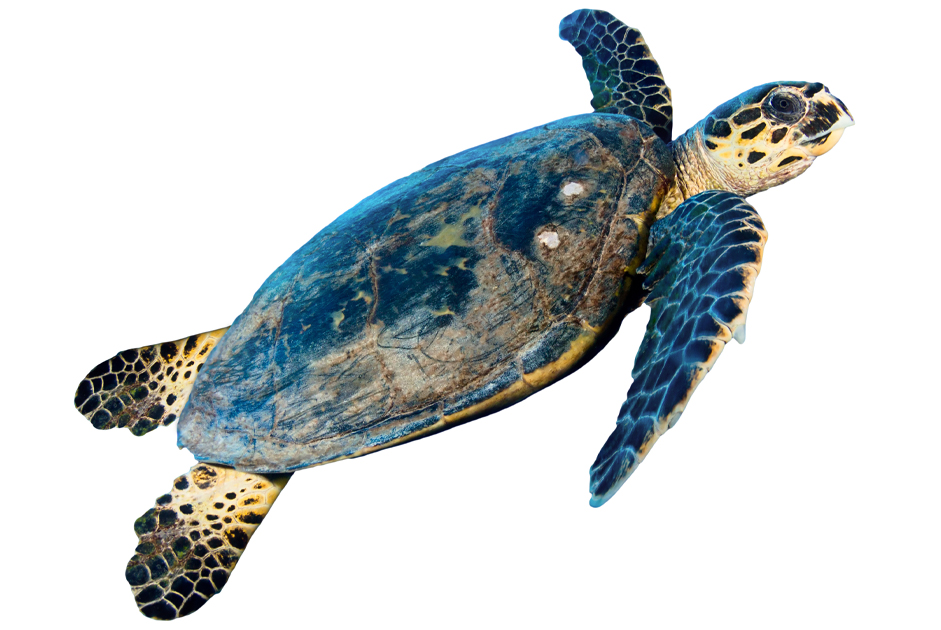
The hawksbill sea turtle is considered critically endangered, with its population having declined by 80%. NOAA Fisheries explains that the biggest threat to hawksbill turtles isn’t necessarily environmental; in fact, hunting for the hawksbill’s iconic tortoise shell for jewelry and other accessories has been the largest contributor to their endangerment. Most commonly found in the Caribbean, Indian and Indo-Pacific oceans, hawksbill sea turtles are busy travelers. Australia’s Great Barrier Reef is a hawksbill hotspot, with 2,000 turtles nesting each year, thanks to two decades of conservation efforts.
Although turtles carry a reputation for being slow, the hawksbill turtle can travel impressive lengths across the ocean. According to NOAA Fisheries, a female hawksbill was tracked traveling 1,160 miles from the U.S. Virgin Islands to Nicaragua. Their diet consists of jellyfish, sea urchins, crustaceans, marine algae, coral and sea sponges. Living up to 50 to 60 years, they nest between April and November each year with eggs hatching after incubating in warm sand for two months before the baby turtles make their way to the sea. On average, hawksbill turtles lay 130 to 160 eggs per nesting season, with turtles reaching maturity between the ages of 20 to 35, much like humans.
Hawksbill sea turtles are crucial to the environment due to their preference for eating sponges in coral reefs which aids in maintaining reef health. Interestingly enough, another type of sea turtle, the leatherback turtle, eats so much jellyfish that the species helps prevent the overpopulation of jellyfish which is music to my jellyfish-phobic ears. It’s important to stay informed about ways to help keep the marine environment pristine for endangered sea life and to think carefully before supporting the over-hunting of some of nature’s most valuable species.