Welcome back to another Trying New Things! In this monthly column, I usually step into a new workout class or wellness trend and report back so you can decide if it’s worth trying. This month, however, I stayed home and attempted something that has plagued me for years: sticking to a recipe
If you know me, you know I love cooking. If you also know me, you know I do not love strictly following recipes. I tend to eyeball measurements and trust my instincts. In order to challenge myself for this article, I chose a very precise, labor intensive recipe.
What Is It?
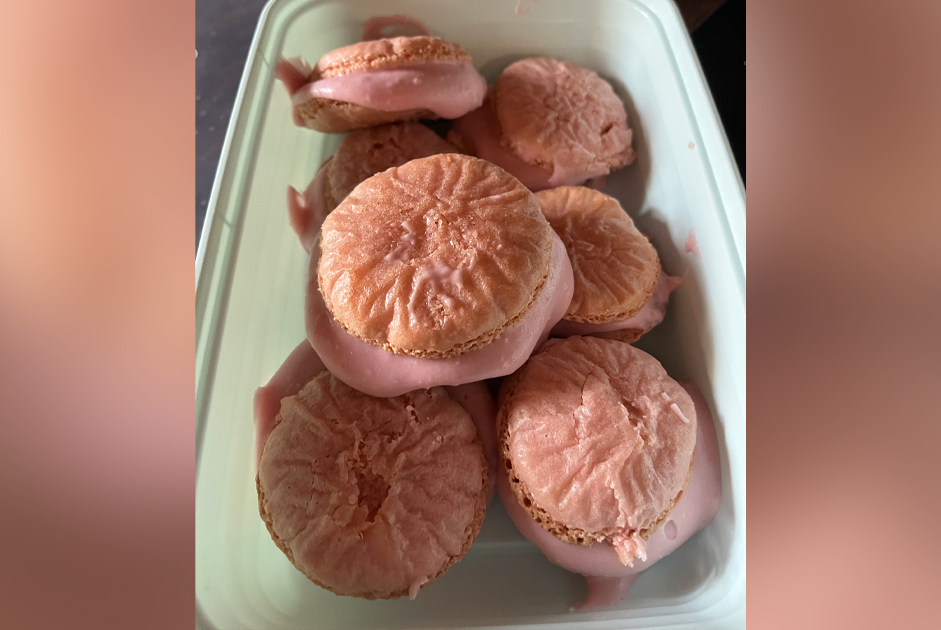
French macarons are delicate cookie sandwiches made from almond flour, powdered sugar, egg whites and granulated sugar. They’re known for their smooth, shiny tops and soft, chewy centers. I filled mine with buttercream and used dye to make them pink.
Unlike most cookies, macarons rely heavily on technique. The structure comes from whipped egg whites (meringue), and the texture depends on a very specific folding process called macaronage. The batter has to be mixed just enough to flow slowly like lava.
The Steps
The basic steps sound simple:
- Combine almond flour and powdered sugar.
- Whip egg whites with sugar until stiff peaks form.
- Fold the dry mixture into the meringue (macaronage).
- Pipe circles onto a baking sheet.
- Let them rest.
- Bake carefully.
My first challenge was that I don’t own a sifter. I pushed the almond flour and powdered sugar through a colander as best I could, but I definitely noticed clumps. In hindsight, a proper sifter would have made the dry mixture lighter and easier to incorporate. I suspect it would have helped with the overall smoothness of the batter during macaronage.
The egg whites also posed a struggle. The recipe said, “beat until stiff peaks form.” I stood there lifting the whisk, pulling up pictures of what the eggs are supposed to look like to compare. Were they stiff enough? Overbeaten? Would this ruin the recipe if I got it wrong?
Then came macaronage, which was painful for my arm to fold the batter so much. I kept stopping to check, folding once more, checking again. I struggled with knowing when to stop mixing. Too thick and they would have peaks on top. Too thin and they would spread into flat puddles.
In the end, my macarons were not only edible, they were actually really good. Macarons don’t leave much room for guessing or improvising. They require patience and attention to detail, which isn’t usually how I cook. I think that’s why it felt so rewarding when they worked.
Beginner Friendly?
If you’re a total beginner, it might be best to stick to cookies. Macarons are technical, sensitive to small mistakes and require a level of precision that can be frustrating. The kitchen was also a complete disaster afterward. If you enjoy a challenge, they are incredibly rewarding.
Macarons taught me that there is a lot of value in slowing down in order to do something properly. Would I make them every week? Probably not. My arm hurts just thinking about having to fold the batter again. But, would I try to follow a recipe again? No doubt.