“When a man knows that he is a child of God, he is free from the bondage of man. He can stand the pressure of the world without the need to fear it.” ~ Howard Thurman
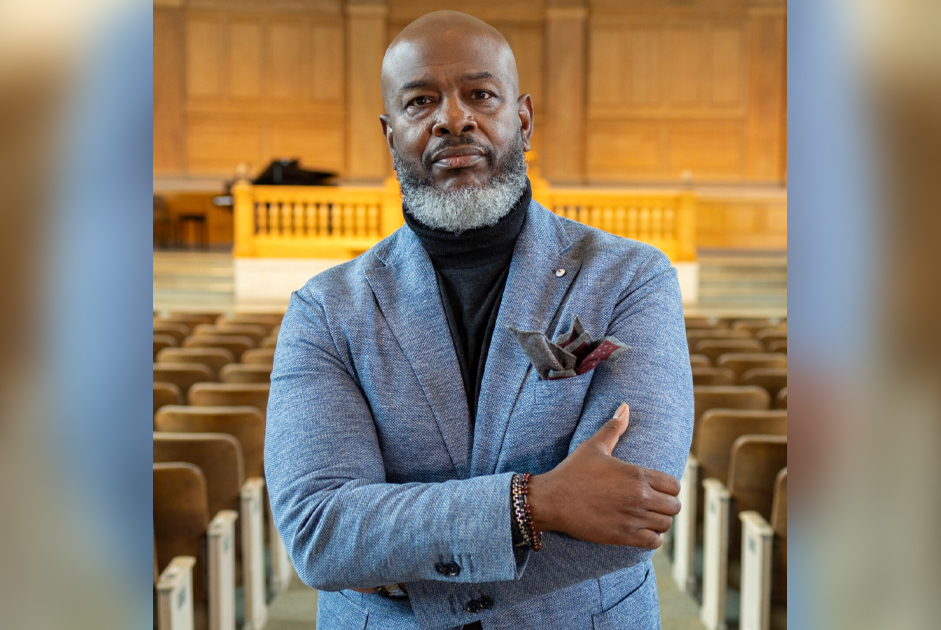
Dr. Derek Hicks is a man of letters. He teaches, he writes, he speaks in both cultural and religious pathways to educate people on all manner of historically relevant topics. Most notably, he writes and lectures on the deeply rooted importance of spirituality and food in the African American experience. He is a beloved professor at Wake Forest University whose research and teaching weave together African American religion, foodways, race, embodiment, black and womanist theologies, and cultural studies.
Here he gives us insight into his background and his cultural and spiritual knowledge.
Speak about your upbringing and how it informed what you became.
I grew up in South Central Los Angeles, or Watts as my section of town is known. My grandparents moved from Louisiana to Los Angeles in 1947. I never met my father. My mother had me at 23 years of age. When my mother was seven months pregnant with me, she suffered a stroke and I was delivered via emergency c-section. My mother’s challenges thrust my grandmother into the role of being my primary caretaker. My grandmother became my anchor and conduit to my understanding of the intersection of spirituality and Louisiana cooking.
I was witness to my grandmother “performing the south” from her Watts porch. Her southern groomed Baptist hospitality was something I soaked up as a young kid, watching her every move.
Tell me more about your thoughts on the importance of cooking, hospitality and the spiritual relevance of this.
I was raised in a house where, if you didn’t like what Grandma was cooking, you had to learn to cook it yourself. As a result, I cultivated a love for cooking. I love many cuisines, but especially enjoy cooking one pot dishes because of their power to feed people emotionally and spiritually. African Americans have often set their foodways and spirituality front and center to their survival and overcoming obstacles. Our culinary and religious culture has aided us in creating community. More than that, religious expression and food engender debate and even competition.
The foodways from West African countries to the U.S. are often overlooked. Rice, okra, yams and legumes are all staples that originated on the continent of Africa.
Gumbo was my grandmother’s culinary exhibition on full display. She would tend to a pot of gumbo from Christmas to New Year’s as a nod to the past – a nod to home. Gumbo is a communal and complex dish made up of several individual ingredients brewed into a unified meal. The soul is the roux – the combination of flour, oil and sometimes butter. It takes a while to make a great roux, but the care and attention it requires is worth it. Then, you add the “holy trinity“ of onion, celery and bell peppers. Great gumbo is a unifying experience.
Religion has always lent itself ostensibly to self-discovery, and the same is true of black culinary history.
What led you to also take an academic interest in religion and tradition?
Religion to me has always been about finding one’s self. It is about one’s orientation to the world through belief. Black culinary culture feeds the flesh while spirituality simultaneously feeds the soul.
Imagine the power of religion for enslaved people who didn’t always have much to lean on other than each other and a faith that things would “get better anyhow.” I have always been enraptured by the idea that my ancestors daily faced death and discrimination while utilizing their own cultural productions to see themselves as worthy recipients of God’s love.
I distinctly remember about 30 years ago when I was formulating my path to becoming a professor that I experienced the loss of two close friends who were shot and killed in Los Angeles. I recall intending to lend comfort to the mother of one of those friends. But, I couldn’t. I buckled, and she said, “my faith in God is stronger despite the loss of my son.” I was fascinated by this revelation from someone who had every reason to question God’s love.
I therefore value teaching my students about religious experience as a contagion and not an indoctrination. I speak on the “knowing” that comes with religious fervor in the African American tradition. Even the “Negro spirituals” were tapestries that thread secret messages or nuances shared when they could not openly show the full extent of their religious expressions.
What is a question you wish more people would ask about your field of study?
I wish people would ask more about how complex the Christian experience is, especially along racial lines. Too often the Christianity of those enslaved is discounted as heretical. But, in fact, their faith tradition exhibits the true essence of the Gospel while it celebrates the notion of togetherness within the community. I wrote a chapter on this subject in a book entitled, “Blacks and Whites in Christian America” that took on the topic of competing claims about the Divine between the enslaver and enslaved. Ultimately, embracing spiritual complexity based upon contextual experience becomes a vibrant place to bring people together in a way that is deeply foundational to our common understanding of faith at its best.