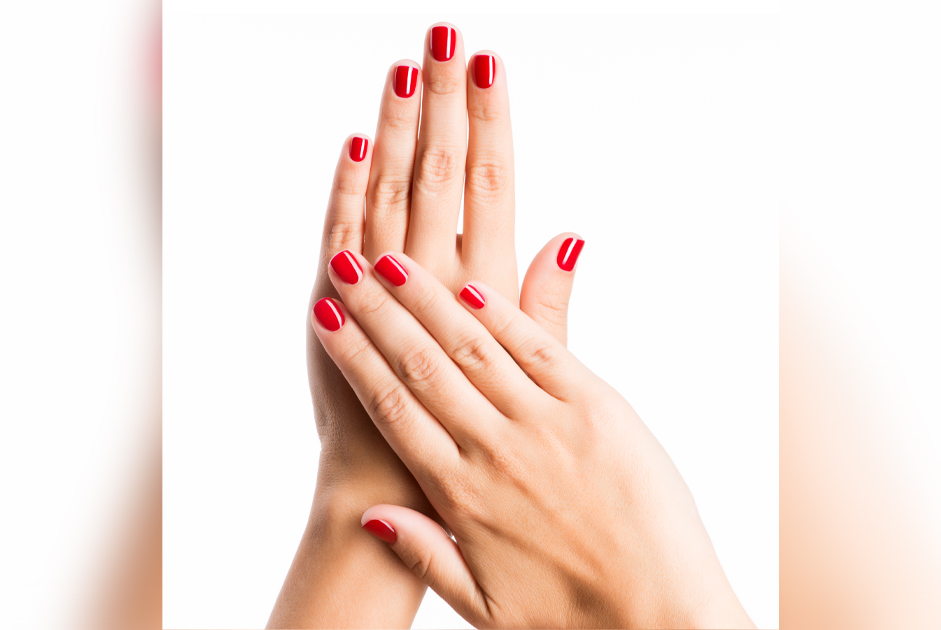
Just like changing your hair or experimenting with a new clothing style, nail trends often reflect a particular moment or serve as a form of self expression. I usually paint my own nails, but recently, I’ve leaned into newer styles and trends, trying gel, Gel-X and dip (my personal favorite). I genuinely enjoy having my nails done; it feels like a fun final touch that completes a look or captures a specific season of life.
I wouldn’t dare paint my nails brown in the summer, but I’m always drawn to that shade once November rolls around. As Christmas approaches, I’m thrilled to head to the salon and paint my nails red or green. In 2025, the “clean girl” aesthetic took over, favoring neutral shades and short lengths, while fashion trends simultaneously leaned into modesty and simplicity. Hair, clothes and nails work together as a collective form of self expression, offering an easy, everyday way to show personality.
Beyond nail health concerns, salon visits are also time consuming and expensive. That realization led me to a bigger question – why do we paint our nails in the first place? And, what is the history behind the long-standing gender norm of women feeling the need to keep their nails done?
Nail Care – Not New!
I was surprised to find out that nail polish is not a new discovery. It dates back to ancient Chinese, Babylonian and Egyptian societies. High class and common people alike have been reported to color their nails with natural dyes, and even soldiers would paint their nails before going into battle. Nail color was not just decorative, but deeply tied to identity, status and ritual. Famous historical figures are also linked to the practice. Cleopatra, for example, was known to paint her nails a deep red, a shade reserved for royalty and used as a visible marker of her power and prestige.
Manicures in America: Thank You Mary E. Cobb
The modern manicure in America can be attributed to one Mary E. Cobb. She was the descendent of a wealthy Virginia family and, while traveling in France, learned traditional French manicuring styles. This is not to be confused with a “French manicure,” popularized in 1970s Hollywood.
Cobb came back to the U.S. and opened a nail salon in 1878. It was called Mrs. Pray’s Manicure with a storefront in New York City. Her business boomed, opening salons in other major U.S. cities and sold beauty products. Even back when Cobb first brought manicures to the U.S., they were a luxury service for wealthy clients.
Although Mary E. Cobb products largely disappeared around World War II, she still was one of the largest female business owners in the U.S. for her time. Since Cobb, women business owners continue in the beauty market.
Like anything in beauty, there are people who get their nails done out of obligation, and others who do it because they genuinely want to. While nail prices and beauty costs in general have increased significantly, those who continue to invest the time and money often do so as a form of self expression rather than expectation. Looking back at the long history of nail care, it’s clear that coloring and caring for nails is not just about aesthetics. From ancient societies to modern salons, nails have functioned as a marker of identity, status, trends and personal choice.
After taking a break to prioritize my nail health, I’ve started to see nail care differently. Whether painted or bare, nails don’t have to be a requirement to be “put together.” Instead, they can be something we opt into, an intentional, creative choice that reflects who we are, the season we’re in or simply what makes us feel good.