America’s Drugstore Evolution
A typical drugstore in the late 1700s was a modest, utilitarian space lined with counters and cabinets brimming with glass bottles and jars filled with elixirs, pills, spices, salves and herbs. Shelves were stocked with popular remedies such as Richard Stoughton’s Bitters, perfumes, beauty items, toiletries and domestic essentials. Over time, drugstores expanded their offerings, and by the 1850s, carbonated “soda water,” a fizzy remedy hailed for its curative powers, was a hot commodity. Druggists even made and marketed their own “secret formulas” which used such ingredients as cocaine and caffeine – completely legal as every drug was over the counter. In 1888, pharmacist Jacob Baur started producing carbon dioxide in tanks, which led to the rise of soda fountains. By the early 1920s, they were common in American drugstores and staffed with a soda jerk behind the counter (named for the “jerking” motion of pulling the soda dispenser levers). Fast forward to today where the majority of drugstores offer customers one-stop-shop convenience for prescriptions, OCM, personal care items, cosmetics, household goods, photo services and enough snacks to rival a small grocery store. Although classic soda fountains have mostly disappeared, a few still remain in North Carolina, offering a taste of nostalgia and keeping this piece of Americana alive. For example, Gene Oldham, owner of S&T’s Soda Shoppe in downtown Pittsboro has recreated the ambiance of a 1900-1940 soda fountain and invites visitors to “come enjoy a shake and a smile, reminisce about the past and make memories for the future” (sandtsodashoppe.com/ourhistory).
Salem’s First Private Homeowner
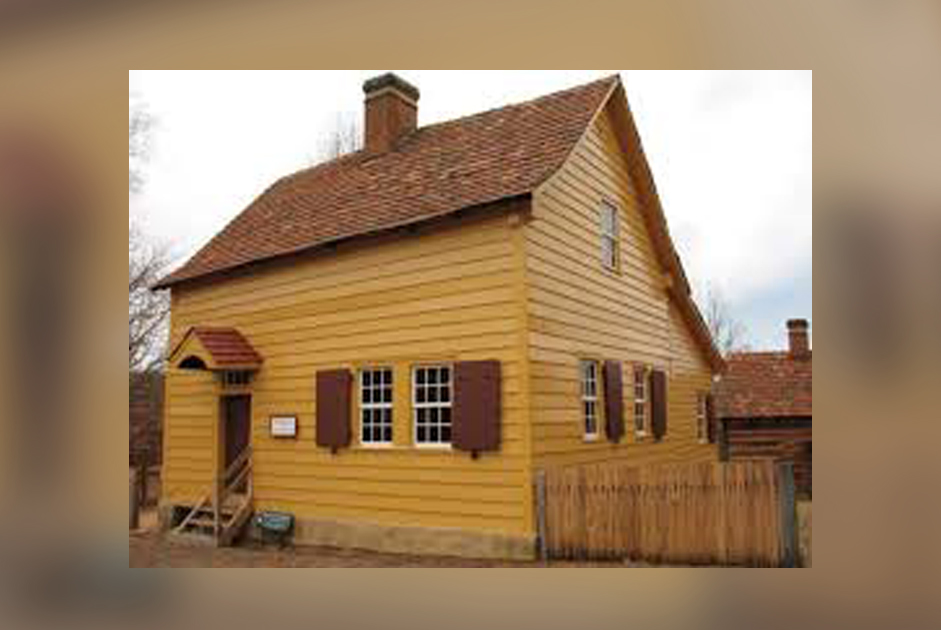
Johann Mattheus Miksch was born in Germany in 1731, and, at the age of 23, made the voyage to the New World as part of the organized Moravian church migration and arrived in Bethlehem, Pennsylvania. A decade later, he married Maria Christina Henrietta Petermann and moved to Bethabara where he worked in the community store, a church-owned retail center where the Brethren did business with non-Moravians (historicbethabara.org). In the spring of 1770, Johann and his family moved to Salem and by November, Johann began oversight of the construction of their home on South Main Street. It would be the first privately owned family home in Old Salem. Historical documents show that while smaller than most in Salem, their house duplicated the style and floor plan typical of early Salem. It was a log dwelling covered with beaded weatherboards and painted – one of the first Salem homes which did not have exposed half-timbered walls. By April 1771, the year the Salem congregation officially formed, the Miksch family had moved into their new home.
Miksch Tobacco Shop, Established 1771
It appears as though Johann was a rather “sickly man” upon arrival in Salem and was without a concrete plan to provide for his family’s daily needs. However, his reputation for being “a very conscientious person” encouraged the church leaders to guide him into a “suitable profession.” With their permission, Miksch opened a modest home-based shop which allowed him to earn a living “by selling candles, shaving products, oil and whale oil, garden seeds, pickled cucumbers, dried fruit and the like, as well as making snuff and fine-cut tobacco” (cityofws.org). Archived documents indicate that shortly after the Miksch family moved in, a portion of the home was enlarged and adapted into a retail space – complementing other businesses built during that period (potter and blacksmith shops, the tavern and the Gemein Haus). Despite early warnings from church leaders that Miksch might “have a hard time in the beginning,” Johann quickly proved them wrong, finding success selling his goods to Moravians, locals and passerby alike. He also made soap and bound books (for which he had been previously trained), and his wife contributed by baking and selling gingerbread. Over time, Johann prospered as a shop owner and gained recognition for the quality of his “fine tobacco products.” Although the house functioned as a drugstore for a time, the later restoration highlighted Miksch’s processing and selling of tobacco. Old Salem acquired the property in 1958, and by 1960, it had been restored to its 1785 exterior and was dedicated as a historic house for Old Salem Museums & Gardens. A true historical treasure, the Miksch Tobacco Shop is the oldest standing log structure in Old Salem, and it is the oldest tobacco shop still located on its original site in America.