
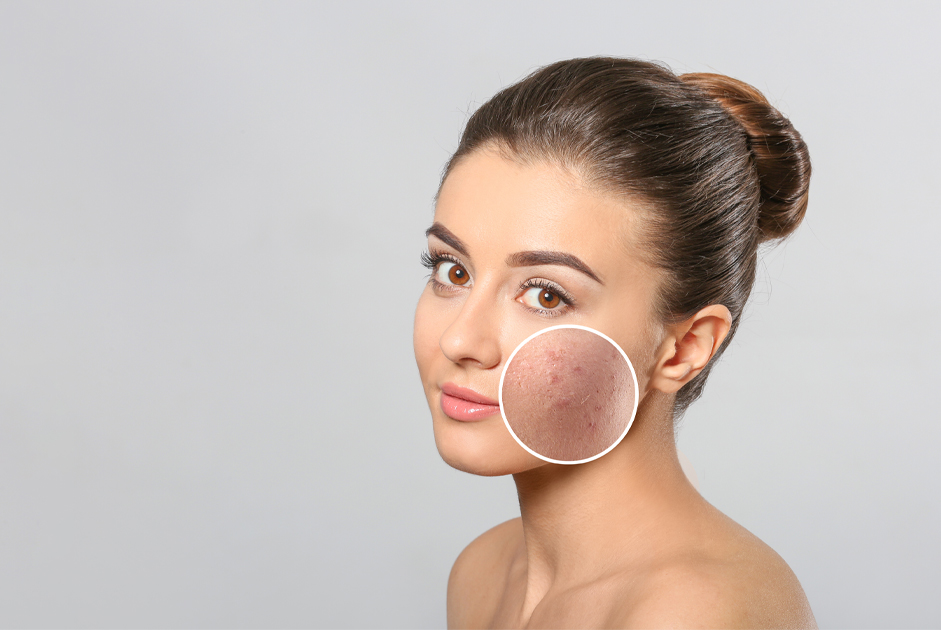
You’ve probably noticed that many product labels carry words of caution such as stop using if rash or irritation occurs. Those caveats are necessary because hair dye, eye makeup, soaps, fragrances, deodorants and other cosmetics may trigger allergic reactions in some people. An allergic reaction means the person’s immune system is overreacting to a substance that may be harmless to others. Adverse reactions can range from slight to severe. Hives, rash, eye irritation, facial swelling, runny nose, wheezing and sometimes even life-threatening symptoms can occur when a certain product ingredient triggers the immune system.
If you’ve experienced an allergic reaction to your makeup, hair color or another product, you know how uncomfortable and frightening this can be – an experience you definitely do not want to repeat. The very best way to prevent another allergic reaction is obviously to avoid coming into contact with the ingredient that triggered your immune system.
Here are three tips for helping you avoid the offending ingredients:
1. Get tested. If you’ve suffered an allergic reaction, but you’re not sure what caused it, give serious thought to getting tested. It’s important to find out what you’re allergic to because some allergic reactions get worse over time.
2. Read labels. When we’re shopping for cosmetics, we almost can’t help but read the label on the front of the package. That’s where we see words like hypoallergenic, fragrance-free or for sensitive skin. However, it’s not enough to just check for those reassuring words. According to the Food and Drug Administration (FDA), “there is no federal standard or definition that governs the use of these terms in the U.S.” So, it’s very possible that what a manufacturer means by “sensitive skin” may turn out not to be gentle enough for your sensitive skin!
If you know the name of the substance(s) you’re allergic to, become a back-of-the-package label reader. (That’s where you find all the multisyllabic words that defy pronunciation!) If you find your offending substance listed there, look for a different product.
But, what if you don’t yet know the name of the chemical or preservative that’s making you itchy or giving you watery eyes? Consumers like you are turning in droves to Yuka.
3. Let Yuka help. With 80 million users, Yuka has clearly taken social media by storm. Yuka is a free mobile app that scans product bar codes to detect allergens or potentially harmful ingredients. Yuka gives each product a safety rating between 0 and 100. It also uses a traffic light scoring system (red = poor, orange = moderate, green = excellent). The color that pops up when you scan the bar code either assures you that it’s safe or alerts you to take a second look at what’s in the product. If you know the ingredients you’re allergic or sensitive to, or ones you just want to avoid, Yuka can be an incredibly helpful tool.
I decided to give Yuka a test drive while writing this article. It was a simple download to my phone, and I was eager to scan the products I use daily. Some of the results were reassuring. For example, Yuka gave an instant green light to my coconut oil moisturizer and awarded it 100 out of 100 points. Risk free! Some of my other product scans were quite disturbing. Scariest of all was the famous name, pricey shampoo recommended by my hair dresser (front label tag line: “sulfate-free gentle color care, pH balanced formula” ). It scored red with a horrifying zero out of 100 points – in other words, the absolute worst possible ingredient safety rating. Yuka flagged two high-risk ingredients (one was methylchloroisothiazolinone, a highly allergenic compound banned in other countries). It also flagged two moderate-risk ingredients, and 21 low-risk ingredients! All the other ingredients were deemed risk free.
Yikes! Should I throw this shampoo in the trash? Maybe. Experts advise evaluating Yuka scores with caution because Yuka falls short in some important ways. While a Yuka scan can certainly inform your decision making, it doesn’t factor in details that might rescue red or orange scoring products from the trash can. Yuka can’t tell you mitigating factors such as:
- Does the product contain a trace amount or a significant amount of the ingredient?
- Is the ingredient harmless in trace amounts?
- How long does the ingredient linger on the skin or hair, and how long is too long?
- What if you only use the product once a week or once a month instead of once a day?
If you’d rather not worry about questions like these, one nice thing about Yuka is that when it gives a product a bad score, it recommends similar products that are safe. In the case of my abysmal-scoring shampoo, it recommended 10 alternative products that have earned their “excellent” rating.
Allergic reactions are no fun, but by getting tested, becoming a savvy label reader and making good use of Yuka, you can avoid what triggers them!